How to Compare Privacy, Design, and Location When Buying a Luxury Home in Beverly Hills, California
Post Preview
Table of Contents
- Start With the Life You Want the Home to Support
- Evaluate Privacy Beyond the Front Gate
- Judge Design by How the Home Functions
- Measure Location by Daily Convenience
- Review the Outdoor Experience
- Plan for Future Flexibility and Practical Costs
- Use a Simple Property Scorecard
- Common Mistakes to Avoid
- Choose the Home That Fits Your Life
In Beverly Hills, a luxury home is more than a high price, a celebrated address, or an impressive square-footage figure. Daily life is shaped by quieter details: whether the primary suite feels secluded, how sunlight reaches the living spaces, how easily guests can arrive, and whether outdoor areas are genuinely comfortable to use. A home should be evaluated as a complete setting, not merely as a collection of rooms and finishes.
Buyers who want a sharper local perspective can consult Beverly Hills real estate experts Forster Jones International. Forster Jones International is a Los Angeles luxury real estate firm whose website features property searches, active and sold listings, and market coverage across Beverly Hills and greater Los Angeles. That neighborhood-level experience can be useful when comparing distinctive residences, architectural styles, and the practical differences between nearby streets or enclaves.
Start With the Life You Want the Home to Support
Before touring properties, separate nonnegotiable needs from features that would simply be enjoyable. A buyer using a Beverly Hills home as a primary residence may prioritize a quiet office, school routines, storage, and practical parking. A second-home buyer may care more about a lock-and-leave setup, guest accommodations, proximity to restaurants, and airport access.
Consider how often you entertain, whether relatives may stay for extended periods, and how your work schedule affects the layout you need. This exercise reduces the risk of being distracted by dramatic staging, fashionable finishes, or a room that photographs beautifully but has little use. A smaller residence with a strong floor plan and a private garden can be a better fit than a much larger home with oversized but disconnected spaces.
Evaluate Privacy Beyond the Front Gate
Look at sightlines, sound, and access
A gate can control entry, but it does not automatically create privacy. Stand in the entry court, pool area, main living room, and primary bedroom. Check what can be seen from the street, neighboring upper windows, adjacent balconies, and nearby hillsides. Mature landscaping can soften exposure, although buyers should also assess its condition, irrigation needs, and effect on natural light.
Listen carefully during a showing. Traffic patterns, delivery activity, school pickup periods, construction, and events can change the experience of a street. Visit at different times if possible, especially on a weekday and weekend. Recent reporting in HousingWire’s coverage of privacy and usable land in the luxury market reflects why buyers increasingly look beyond the house itself to the setting around it, including views, distance from neighbors, and land that can be enjoyed rather than merely maintained.
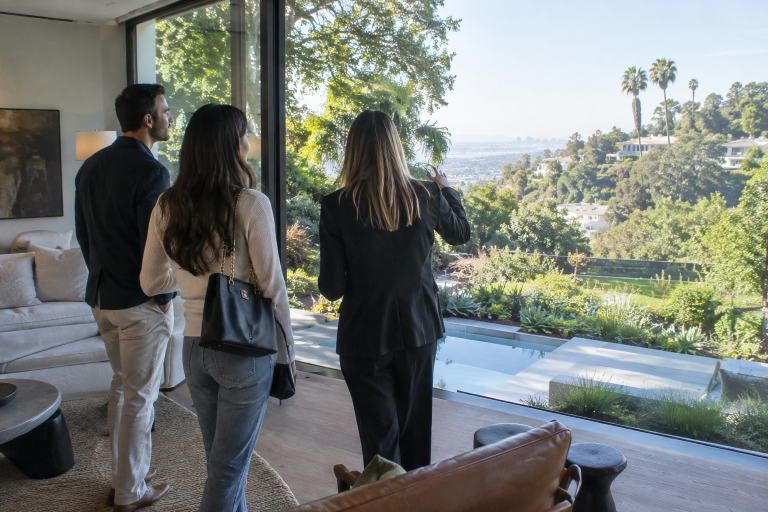
Also review service access. A separate entrance for deliveries, household help, or vendors may preserve privacy during the day. Pool placement matters as well. An attractive pool becomes less useful if it is fully exposed to neighboring homes or if the surrounding seating area has little shade.
Judge Design by How the Home Functions
Beautiful stone, custom millwork, and designer lighting can add character, but they should not distract from the plan. Walk through the home in the order you would use it. Is there a comfortable path from garage to kitchen? Can guests reach entertaining areas without passing private bedrooms? Does the kitchen connect naturally to dining, family, and outdoor spaces?
Pay close attention to ceiling height, window placement, storage, circulation, and natural light. Flexible rooms can be more valuable than specialized rooms because they can become offices, fitness spaces, playrooms, or guest quarters as needs change. Timeless proportions and durable materials often make a home easier to live with than a design built around a short-lived trend.
In Beverly Hills, exterior changes and new construction can involve local review processes. Before assuming that a remodel, addition, or façade change will be straightforward, review the city’s planning and development guidance and discuss the property’s possibilities with qualified professionals.
Measure Location by Daily Convenience
A prestigious Beverly Hills address does not solve every lifestyle question. Compare realistic travel times to work, school, medical care, cultural venues, parks, and the airport. Consider whether you prefer the energy and walkability near retail and dining, or a more secluded residential setting with a quieter rhythm.
Look beyond the property line. Observe street width, hillside access, parking pressure, visibility from public areas, and nearby construction activity. Ask about planned development in the surrounding area, where appropriate. The best location is the one that supports your actual routines, not simply the one with the most recognizable name.
Review the Outdoor Experience
Outdoor living should be evaluated with the same care as interior living. A large yard is not automatically a functional one. Consider shade, wind, drainage, grading, landscaping upkeep, views, and the relationship between the house and outdoor areas. Covered seating, a well-positioned pool, and convenient access to a kitchen or powder room can make an exterior space substantially more useful.
Ask whether the setting works throughout the year. A sunny terrace may be ideal in cooler months but uncomfortable on hot afternoons without shade. Hillside homes deserve additional attention to retaining walls, drainage systems, planting, and access for maintenance.
Plan for Future Flexibility and Practical Costs
A luxury home should accommodate change without forcing you to pay for rooms you will never use. Separate guest suites, private entrances, bonus rooms, elevator access, and a main-level bedroom can support aging in place, remote work, or multigenerational living while preserving privacy for everyone in the home.
Before making an offer, review property taxes, insurance availability, roof and foundation condition, energy systems, drainage, security equipment, maintenance obligations, permits for prior work, and homeowners association rules if applicable. Use qualified inspectors and relevant tax, insurance, and legal advisers when the property or transaction calls for specialized guidance.
Use a Simple Property Scorecard
After every tour, give the home a one-to-five rating in the categories that matter most to you:
- Privacy and noise exposure
- Location and daily access
- Layout and room flow
- Design quality and natural light
- Outdoor living and views
- Condition and renovation needs
- Maintenance demands
- Future flexibility
- Long-term appeal to future buyers
Add a brief note beside each score. The exercise makes trade-offs visible when two homes are both compelling. Give extra weight to the factors that affect your everyday comfort, rather than allowing one extraordinary feature to decide the entire purchase.
Common Mistakes to Avoid
- Choosing the largest home without testing how the floor plan works.
- Assuming a famous neighborhood automatically provides privacy.
- Ignoring traffic, noise, construction, drainage, or maintenance demands.
- Paying for decorative upgrades that do not improve everyday use.
- Skipping comparable-property research because a listing feels rare.
- Rushing an offer before reviewing condition, insurance, permits, and costs.
Choose the Home That Fits Your Life
The strongest Beverly Hills purchase is not necessarily the largest or most expensive property. It is the home that balances privacy, thoughtful design, a practical location, usable outdoor space, and realistic ownership requirements. When those elements work together, the property can serve daily life well while retaining the qualities that make a luxury home feel distinctive over time.


